Shopping Cart
There are no more items in your cart


Available
✨ A premium shaving micro-guide from the barbershop to your daily routine.
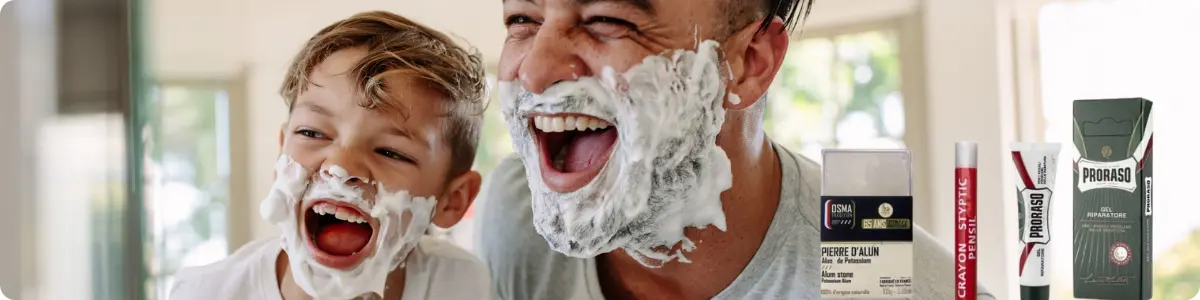
✔️ Traditional shaving is gaining ground worldwide again, bringing back techniques and products that old-school barbers used with absolute success. Among them, two classic tools stand out for their usefulness in minor cuts and immediate skin relief: the alum block and the hemostatic pencil. Although often confused with each other, they actually serve different needs and different moments in shaving.
✨ At HairMaker.Gr – and in the barbershop – we use them daily. This experience has shown us that the right choice can make the difference between a shave with minor irritations and a truly clean, comfortable result. Before we get into the details, let's see what exactly each one does and which is right for your skin.
The alum block is perhaps the most misunderstood – yet most useful – tool in traditional shaving. It's a natural mineral, crystalline alum "block" that has been proven to soothe the skin, close pores, and reduce the risk of infection from micro-cuts. It belongs to the family of natural astringents and has been used for over 2,000 years in skincare. At HairMaker.Gr we recommend it very often, especially to those just starting with safety razors (DE) or shavettes.
Its composition is based on potassium aluminum sulfate, internationally known as Potassium Alum. This ingredient works as a "natural sealer": when it comes into contact with the skin it creates a thin, protective membrane that stabilizes pores and helps quickly coagulate small blood droplets. Most shavers pass it over the entire face after shaving as a quick test: if they feel intense stinging, it means the razor pressed more than it should or that the technique needs minor adjustments.
Beyond relief, the alum block also has significant antibacterial action. This makes it extremely useful after a close shave, where the blade momentarily "opens" the skin's surface. With a gentle pass, inflammation, redness, and the possibility of minor infections are limited.
Something many people don't know is that the alum block can also function as a training tool. In the barbershop we often use it to show a new shaver which areas he "cut poorly". If the alum "stings" in a specific spot on the neck, for example, it means that next time a different blade angle or less pressure is needed.
Alum blocks are large, ergonomic, and apply easily. Two types circulate in the market: Potassium Alum (the top and purest), and Ammonium Alum (more economical, but with more intense stinging). Either way, they're the "insurance" step after every shave – especially for skin that reddens easily or has minor imperfections.
Unlike the alum block, the hemostatic pencil is made from aluminum sulfate (Aluminium Sulfate). This ingredient has stronger and much more targeted action: it immediately closes the skin at points where there's actual bleeding. That's why we use it for "deep" micro-cuts — the familiar small "nicks" that might draw a few drops of blood when we press the blade wrong or go against a difficult angle.
The hemostatic pencil comes in two forms: solid stick and gel. The stick is classic and very popular in barbershops because it touches exactly where the cut is without making a mess. The gel, on the other hand, is ideal for easier application and can even reach deeper spots, like the nose outline or chin.
Compared to the alum block, the hemostatic pencil has one key characteristic: it stings more. In the barbershop we say "the more it stings, the more it saved you". That's because the active ingredient creates a thin layer, almost like "cement", that seals the wound in seconds and stops the bleeding instantly.
It's important to always apply it with clean hands and on moist skin. We wet the tip of the pencil, press it pointedly for 3–5 seconds and… done. The wound seals and we can continue shaving or grooming without fearing it will "reopen".
At HairMaker.Gr we've tested dozens of brands in the barbershop — from OSMA to Proraso and Clubman. The conclusion is clear: every man should have a hemostatic pencil in his kit. You don't use it daily, but the day you need it, you'll remember how lifesaving it is.
«Whatever you choose — keep your skin safe, clean, and ready for the next shaving battle.»
Although both products have the role of astringent, their chemical structure differs significantly. The alum block (Potassium Alum) consists of potassium aluminum sulfate – a gentler, natural crystal that works mainly for surface tightening of pores and mild antimicrobial action. It's ideal for use after every shave, daily, even on sensitive skin.
On the other hand, the hemostatic pencil (Aluminium Sulfate) has more aggressive action because its chemical form is designed to cause immediate blood coagulation in targeted wounds. It's not intended for the entire face but for specific cuts – those that truly need "immediate intervention".
An easy way to remember the difference is this:
Both tools are valuable, but they serve clearly different roles. That's why in the barbershop we always have both at every shaving station.
The alum block is ALWAYS applied after shaving and always on slightly damp skin. After cleansing, we slightly wet the stone and pass it over the entire face with gentle, circular motions. The next step is to wait 15–20 seconds for the crystal to work. When it dries, we can either rinse it off or proceed to aftershave.
The hemostatic pencil has a completely different procedure. We don't "pass" it, we press it. We wet the tip of the pencil and touch exactly the spot of the cut for 3–5 seconds. This pressure is what activates the astringent action. If we immediately rinse off the white residue, there's a risk the spot will "reopen" — something we see very often in beginner shavers.
In the barbershop we observe that the combination of both products brings the best result: alum block all over the face for disinfection and tightening, hemostatic pencil only where immediate bleeding cessation is needed. This routine reduces red spots, micro-cuts, and irritations by almost 80%.
Both methods are quick and simple, but the correct technique —as with shaving itself— makes all the difference.
In traditional shaving, every tool has its character. The alum block works like a gentle guardian that soothes and protects the skin, while the hemostatic pencil is the "tough guy" that intervenes when there's real need. The question isn't which is better — but which is right for the moment you need it.
In the barbershop I see it daily: some men have consistent technique but sensitive skin; others have extremely tough skin but make mistakes in blade angle or pressure. The choice between the two products isn't determined by experience, but by the type of shave and the type of cut.
«Alum protects you — hemostatic saves you.»
The alum block works best when the shave was good but needs a little extra care afterward. On the other hand, the hemostatic pencil is the "emergency" specialist: where the blade took more skin than it should have.
✔️ When to prefer Alum Block:
⚠️ When to turn to Hemostatic Pencil:
✨ Conclusion: if you shave frequently, you need both. The alum block works as a "shield" after shaving, while the hemostatic pencil is the targeted tool that stops bleeding and immediately closes the wound. Their balance always brings the best result.
Every day in the barbershop I see the same pattern: men don't have a problem with shaving — they have a problem with the small mistakes they make without realizing it. And these mistakes are what create cuts, irritations, and persistent redness. The alum block and hemostatic pencil then become the two best allies.
One of the most common mistakes is excessive blade pressure. Even experienced shavers sometimes "tighten" their hand unconsciously when rushing. This leads to horizontal micro-scratches on the skin — that's where the alum block works wonders.
The second mistake is "angle cutting". This leads to a small but deeper cut — the kind that needs immediate intervention with hemostatic pencil. In 3–4 seconds the blood stops and the skin "locks".
✔️ In the barbershop we use alum for the entire face ⚠️ We use hemostatic only where there's actual cutting ✨ The combination of both reduces irritations by up to 80%
Men who start using these two products correctly gradually see their shave become cleaner, more comfortable, and more predictable. It's not an exaggeration to say that the alum block "trains" your technique.
«A good tool stops the blood — technique stops the cuts.»
✔️ Alum Block — Ideal for daily use and irritation prevention.
✔️ Hemostatic Pencil — Immediate action on bleeding cuts.
✨ Alum leaves skin clean, tight, and disinfected.
⚠️ The pencil stings more — but stops bleeding immediately.

Subscribe to our newsletter and receive unique content about shaving, beard, hair, and clean men's grooming — as we share it in the barbershop.
No spam. Only substance.

Giannis – Owner of HairMania Greece & Founder of HairMaker.Gr
Professional hairdresser with 25 years of experience in hair and beard care. Owner of HairMania Greece and founder of HairMaker.Gr.
Together with the HairMaker.Gr team, I publish articles based on real testing, customer feedback, and experience from the barbershop.
Questions about hair or grooming? Email us at info@hairmaker.gr.
Follow us:
@hairmakergr | @hairmaniagr




Comments (0)