
Shopping Cart
There are no more items in your cart




Available
The shavette is today one of the most beloved tools among barbers, but its history didn't start that way. Before it evolved into a symbol of technique, precision, and professionalism, it was a necessity born from the daily reality of barbershops and the need for a cleaner, safer, and more versatile razor. From the German innovation of the 20th century to today's worldwide revival of traditional shaving, the shavette has traveled a fascinating journey ✔️.
In this article, we explore every aspect: its historical origins, technological evolution, the reasons that established it, and how to use it correctly for a flawless, close shave. With emphasis on authenticity and experience, HairMaker.Gr presents a complete journey into the world of the shavette — from its first creation to its current prominence in barbershops around the world ✨.
The history of the shavette begins with the need for a razor that offers absolute precision along with hygienic safety. In the early 20th century, the empire of barbers relied on the straight razor. It was effective, impressive, a true tool of art — but it also had a "dark" side: continuous contact with different clients meant that the chances of infection were high. Back then, there were neither UV sterilizers nor strict hygiene protocols.
The reasoning was simple but ingenious: ✔️ the feel and technique of the traditional straight razor ✔️ the hygienic safety of a disposable blade ✔️ the ease of replacement without sharpening
Thus was born what we know today as the shavette. The name came from DOVO and quickly became internationally established. The shavette freed barbers' hands, offering a clean, safe, and precise solution that didn't require the high maintenance skills of the traditional straight razor.
Over time, as hygiene laws became stricter, the shavette went from an "alternative option" to a "mandatory tool." Millions of barbers around the world began adopting it not only for shaving but also for neck cleanups, sideburns, lines, and blending around fade haircuts. The evolution had begun – and there was no turning back.
Unlike the straight razor that requires frequent sharpening and special care, the shavette operates with replaceable blades that can be changed in seconds. This makes it ideal for barbershops, where the continuous flow of clients doesn't allow for delays. The blade is inserted through a simple mechanism: two pins hold the half DE blade steady, while the cover "locks" the blade in place with a characteristic click.
The shavette became particularly popular because it eliminates the need for honing. You don't need sharpening stones, strops, pastes, or preparation time. All you need is a clean blade, proper grip, and patience. This simplicity allowed many new shavers to enter the world of traditional technique without needing complicated maintenance equipment.
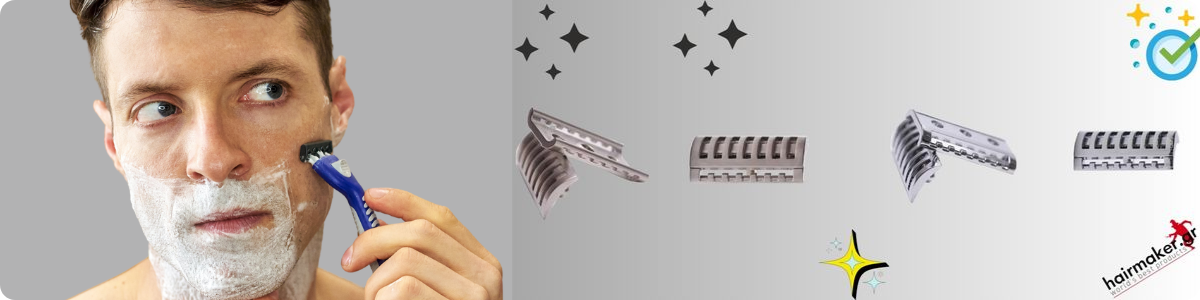
A small selection of top shavettes for reliable, clean, and professional shaving ✔️
Today, you'll hardly find a barbershop that doesn't have a shavette in its basic arsenal. For professionals, it's not just a tool — it's an extension of their hand. The shavette offers absolute precision, hygiene, and control in every movement, making it essential in every modern haircut.
The tightening of hygiene regulations made the shavette the only permissible solution for many professionals, as using a replaceable blade ensures complete safety. The tool combines traditional ritual with modern hygiene standards — a balance that elevated its value in the barbering industry.
The shavette is a tool that accompanies the barbershop atmosphere. The warm towel, the scent of shaving soap, and the characteristic sound of the blade on skin create an experience that combines tradition and modern aesthetics.
That's why clients love the process. It's not just the deep shave; it's the ritual, the care, and the feeling that every stroke is made with precision and safety. This is how the shavette transformed into a symbol of quality barbering.
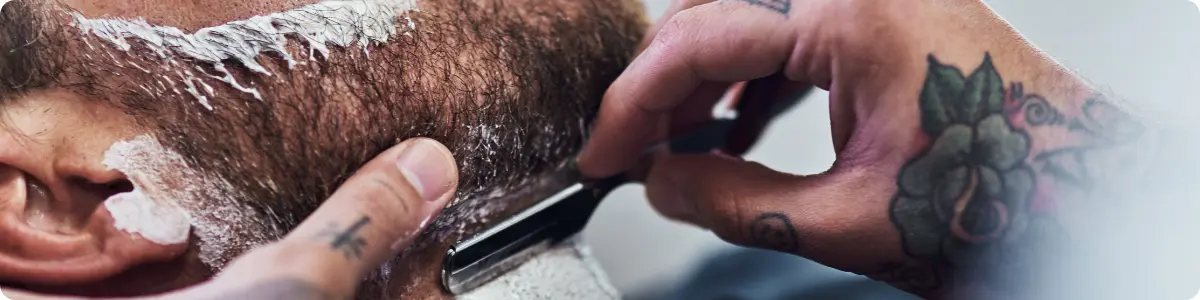
The shavette is a precision tool, not one for rushing. Proper use delivers a deep, clean, and aesthetically superior shave — as long as certain basic principles are followed.
The grip is the first step toward control. Three fingers on the head, the thumb on the blade body, and the pinky on the tang provide stability and precision. This maintains the natural wrist movement without pressing on the skin.
The lather should be of medium density to allow the blade to glide. Too thick lather increases friction, while excessively thin lather doesn't protect the skin.
After shaving, a good aftershave lotion helps close the pores, reduces irritation, and provides a fresh feeling. In professional settings, changing the blade after each client is an inviolable rule and a guarantee of hygiene.
Andreas K.
⭐⭐⭐⭐⭐
Maria L.
⭐⭐⭐⭐⭐
Giorgos P.
⭐⭐⭐⭐⭐
Konstantinos V.
⭐⭐⭐⭐⭐
The shavette isn't just a shaving tool — it's the "ruler" that determines absolute symmetry and cleanliness in beard styling. For those who maintain beards, the detail in the contour is what distinguishes a simple look from a groomed, sharp, and modern result.
The precision of the shavette allows the professional — and the experienced home user — to create clean lines on the cheekbones, "sculpt" the neck, and correct small asymmetries that no electric machine can reproduce with such finesse.
When the shavette is used correctly, it delivers the cleanest and most professional result, without pulling and without irritation. Barbers agree: "the shavette is the tool that makes beard styling an art."
The ideal tool depends on your hand, your shaving style, and your experience level. Shavettes aren't "all the same" — there are different handle types, different blade-changing mechanisms, and materials with different feels in hand.
The feel in hand is crucial. A heavy shavette offers stability, while a lighter one is more flexible and beginner-friendly. The quality of the mechanism that holds the blade is where safety is judged.
Finally, frequency of use plays a big role. If you shave daily, a sturdy model with a stable mechanism is the only way. But if you want a tool for occasional shaping, a lighter option is ideal.
Selected products for top results in traditional shaving and shaping ✔️
✔️ Always start with clean, warm skin to soften the hair.
✔️ Use less lather than you would with a DE safety razor.
✔️ Hold the shavette at a 20°–30° angle for safe shaving without cuts.
✔️ Work with small, controlled movements — never fast strokes.
✔️ Don't press the blade; just let it glide over the skin.
✔️ Gently stretch the skin with your other hand for a cleaner cut.
✔️ Change the blade frequently — a dull blade causes irritation.
✔️ Don't shave on irritated skin — give it time to calm down.
✔️ For beard shaping, move from top to bottom for a symmetrical result.
✔️ Always finish with aftershave for disinfection & skin relief.
✔️ Before starting, do a practice "dry pass" to warm up the wrist.
✔️ After shaving, rinse the shavette with very hot water and dry thoroughly.

Subscribe to our newsletter and receive exclusive content about shaving, beards, hair, and pure men's grooming — just as we share it in the barbershop.
No spam. Only substance.

Giannis – Owner of HairMania Greece & Founder of HairMaker.Gr
Professional hairdresser with 25 years of experience in hair and beard grooming. Owner of HairMania Greece and founder of HairMaker.Gr.
Together with the HairMaker.Gr team, I publish articles based on real tests, customer feedback, and barbershop experience.
Questions? Email: info@hairmaker.gr
Follow us:
@hairmakergr | @hairmaniagr
Comments (0)