
Shopping Cart
There are no more items in your cart



Directly In Stock
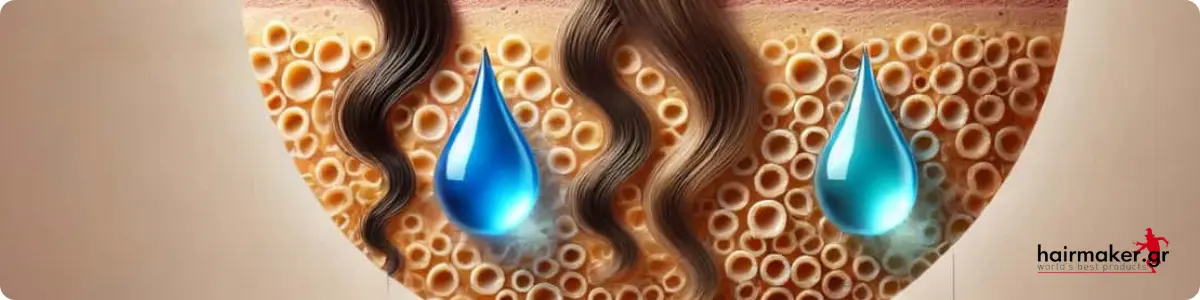
Porous hair is one of the most defining — and often misunderstood — factors in hair care. It’s not just about whether your hair looks dry or oily, but about how exactly the hair strand absorbs, retains, and loses moisture and active ingredients from products ✔️
When you understand your hair’s porosity level, you stop “blindly testing” products and routines. Instead, you choose targeted shampoos, masks, and leave-ins that work with your hair’s structure, delivering real hydration, better styling, and healthier appearance over time ✨
Porous hair isn’t a “hair type,” but a physical property of the hair determined by the structure of its cuticle. The cuticle consists of microscopic scales that act as protective armor. When these scales are closed, the hair struggles to absorb moisture. When they are open or damaged, it absorbs easily — but loses moisture just as quickly.
In practice, this explains why two people can use exactly the same product and have completely different results. Porous hair is influenced by genetics, but also by coloring, bleaching, heat, and even how often you wash your hair.
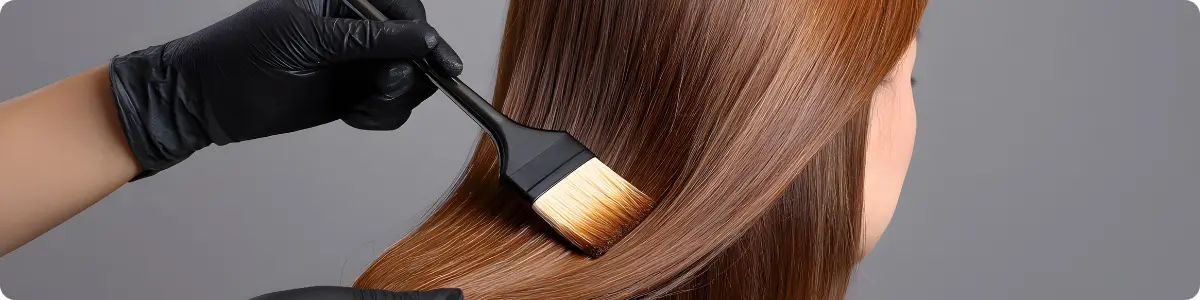
In a professional setting, such as a barbershop or salon, porous hair is one of the first factors assessed before any service. An experienced professional “reads” the hair by touch and knows whether it needs light hydration, intensive nourishment, or protection from moisture loss.
Porous hair is divided into three basic levels, which determine how your hair reacts to hair care and styling products. Correct identification is the key to avoiding disappointment from products that “don’t work.”
Low porosity hair: Scales are tightly closed. The hair appears smooth and shiny, but struggles to absorb moisture. Products often “sit” on the surface.
Medium (normal) porosity hair: The most balanced form. Absorbs and retains moisture easily, without extremes. It’s the easiest to manage.
High porosity hair: Scales are open or damaged. The hair “thirsts” for moisture, but loses it quickly, leading to frizz, dryness, and breakage ⚠️
Product absorption depends not only on the quality of the formula, but on how the hair cuticle “opens” or “closes.” In practice, this means the same shampoo or leave-in can work perfectly for one person and almost not at all for another.
For low porosity hair, products need help to penetrate. For high porosity hair, the problem isn’t moisture entry but its retention. This is where frizz, rough texture, and loss of shine often occur.
✔️ Pro tip: If your hair looks “thirsty” a short time after applying products, you likely have increased hair porosity and need better moisture sealing.
Correct diagnosis of hair porosity is the first step to building an effective hair care routine. There are simple tests used even in professional environments, without specialized equipment.
The water test
✔️ Floats → low porosity hair
✔️ Sinks slowly → medium porosity hair
✔️ Sinks quickly → high porosity hair
A second reliable test is the slip test. Running your fingers from the ends toward the roots, you can “feel” the condition of the hair cuticle.
For low and medium porosity hair, the goal isn’t excess but smart balance. These hairs can look healthy and shiny, as long as they aren’t “blocked” by heavy formulas that remain on the surface.
For low porosity hair, water-based products and lightweight textures are ideal. A light leave-in conditioner or hydrating spray works best when the cuticle is slightly “open” — which is why warm water during washing makes a big difference.
✔️ Routine advice: Apply a mask after shampooing and cover hair with a warm towel for 5 minutes. Mild heat helps absorption without damage.
Medium porosity hair is the most “flexible.” It tolerates both hydrating and mild protein products, maintains styling, and doesn’t easily get weighed down. Here, routine consistency is more important than frequent product changes.
High porosity hair is often the result of chemical processes, intense heat, or mechanical stress. In this case, the hair acts like a sponge: it absorbs moisture immediately, but loses it just as quickly.
Here, the philosophy changes. Moisturizing isn’t enough — you need sealing. Thick creams, deep nourishing masks, and natural oils create a protective film that reduces moisture loss and limits frizz.
✔️ LOC Method: Liquid (water or leave-in) → Oil (oil) → Cream (cream). A simple but highly effective system.
Protein treatments also have a place in the routine for high porosity hair, provided they’re used in moderation. The goal is to strengthen the cuticle, not harden the hair ⚠️
Low Porosity Hair
Struggles to absorb moisture, but keeps its shine when the right lightweight formulas are chosen.
✔️ Ideal products: water-based, sprays, light leave-in
⚠️ Caution: buildup from heavy oils
Medium (Normal) Porosity Hair
Absorbs and retains moisture evenly, offering easy styling and consistent results.
✔️ Ideal products: balanced conditioners & masks
✔️ Styling: lasts without weight
High Porosity Hair
Absorbs moisture immediately but loses it quickly, leading to frizz and rough texture.
✔️ Ideal products: masks, creams, butters
⚠️ Essential: moisture sealing (LOC)
What This Means for Your Routine
Product selection should be tailored to hair porosity, not just hair type.
✔️ Goal: proper absorption & longevity
✔️ Result: fewer products, better performance
If you want to truly make the most of your hair porosity, product selection alone isn’t enough. Small daily habits can drastically change how your hair absorbs and “holds” care.
✔️ Pro tip: If a product “sits” on your hair and doesn’t absorb, it doesn’t mean it’s bad — it just doesn’t suit your porosity level.
When your routine aligns with your hair porosity, your hair starts to look calmer, more elastic, and noticeably healthier.

Subscribe to our newsletter and receive exclusive content about hair, styling, and premium care — just as we share daily at HairMaker.Gr.
No spam. Only substance.

Giannis – Founder of HairMaker.Gr
Professional hairdresser with 25 years of experience in hair care and styling.
Articles are based on real product testing and daily experience from HairMaker.Gr.
Contact: info@hairmaker.gr



Comments (0)