
Shopping Cart
There are no more items in your cart
Available
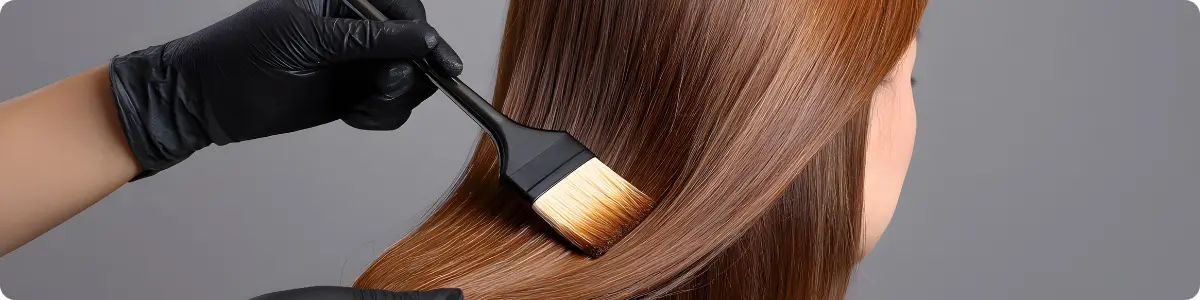
Professional hair dyes represent the "gold standard" in the hairdressing world because they offer stability, precision, and complete control over the final result. Unlike retail dyes, they use high-quality pigments and advanced technologies that ensure better penetration, longer duration, and more natural tones without unwanted reflections. The difference is evident both in the quality of the color and in the hair's behavior after the process.
As a professional with many years of experience in the salon, I've seen time and again how the right choice of professional dye can completely transform an image — not only in shade but also in texture, shine, and overall hair health. This article brings together all the knowledge, practical experiences, and details you need to know to truly understand the difference between professional and simple retail dyes and to make better choices for your hair color.
Professional hair dyes aren't simply a more "expensive" product category; they represent a **holistic transformation experience** based on advanced chemistry, color technology, and specialized application. The key element that makes them stand out is the stability of pigments, the quality of ingredients, and predictable performance. Where retail dyes try to cover the needs of millions of consumers en masse, professional dyes are designed to be used by hairdressers who know how to manage the peculiarities of each hair type.
Additionally, professional lines have **multiple undertone bases**. For example, a 7.1 isn't simply "ash blonde" but a precise balance between blue and green pigments, designed to neutralize unwanted orange and red reflections. This precision is what allows salons to achieve truly professional results.
Finally, **result duration** is a real quality test. Where a simple dye may fade after 3–4 washes, professional lines maintain tone and shine for weeks — even months — provided proper maintenance products are used. The reason is the more stable molecular structures of pigments and the way they "lock" inside the hair cuticle.
When a client asks "Why is professional dye so different from a simple one?" the answer lies in the ingredients, their concentration, and the chemistry of the formula. Professional dyes contain **much higher quantities of pure pigments**, which allows better coverage, more uniform performance, and intensity that doesn't fade quickly.
The most advanced brands have also incorporated protection technologies such as *bonding systems*, which help reduce broken bonds during dyeing. The result? More stability, less damage, and better overall texture to the hair, even in difficult cases like blonde shades or 100% gray.
The great truth is that **color quality is built on ingredients**. The purer, more balanced, and technologically advanced the formula, the more natural, luminous, and healthy the result. And this is why professional products are considered the only way for those seeking superior performance, accuracy, and color duration.
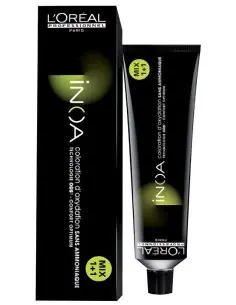
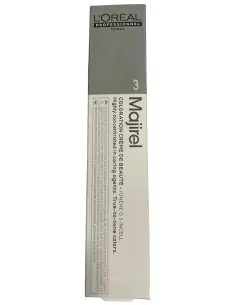
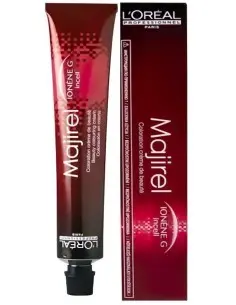
A small selection of lines we use daily in the salon and offer stability, duration, and safe results.
The process of applying professional hair dyes isn't simply "applying color and waiting." It's a technical procedure that requires knowledge of chemistry, hair diagnosis, understanding of pigments, and experience in managing different hair types. Before any application begins, the hairdresser must diagnose: assess porosity, thickness, elasticity, undertones, previous dyes, possible color alterations, and any damage from heat or styling.
Next, the hairdresser selects **the appropriate ratio of color and peroxide**. In professional lines, peroxide (developer) exists in multiple levels, from 3Vol to 40Vol, depending on whether we want simple enhancement, gray coverage, lightening, or correction. Each ratio completely changes the dye's behavior. That's why using a "standardized peroxide" as happens in retail boxes cannot give accurate or natural results.
The last but critical step is proper **post-color treatment**: using special pH-stabilizing shampoo, moisturizing mask, and products that "seal" the color. Without this process, even the most expensive dye quickly loses its shine.
In the salon, we see clients daily who come for "color correction." The common element? Most had previously used retail dye. The reason is simple: box dye is designed as a "one product for all" solution, which cannot work in real conditions where each head has its own chemistry, dye history, and natural base.
Another common phenomenon is the so-called **"color banding"**. Because box dyes have very strong alkaline agents, they're usually applied to lengths and ends without distinction. This causes uneven shade levels, dryness, and "rusting" phenomena at the ends. In contrast, in the salon we know that ends usually need much less processing — often just glossing and tone refresh.
Finally, one of the biggest problems is **damage**. Retail dyes have high content of ammonia and alkaline agents, which must work on all hair types. However, this often leads to cuticle destruction, split ends, dull texture, and loss of elasticity. With professional dyes, the process is controlled and designed to keep the hair structure stable and healthy.
Choosing the right shade of professional dye isn't just a matter of taste; it's a process directly connected to skin tone and undertone. Having worked with hundreds of clients in the salon, I observe that when a shade "matches" the skin, the result immediately looks more natural, bright, and harmonious.
1. Determine your skin tone
Skin tone is divided into light, medium, and dark. Usually, light tones match with blonde, cool, or neutral browns, while darker tones combine excellently with chocolate, mahogany, and deep brunette shades. However, tone is only the beginning; what makes the difference is the undertone.
2. How to find your undertone
• If the veins on your wrist appear blue → you have a cool undertone.
• If they appear green → you have a warm undertone.
• If they alternate → you have a neutral undertone.
This determines whether you should move toward ash, pearl or gold, copper shades.
3. The contrast rule
For many clients, we apply the "contrast" logic: for cool undertone, we give a warmer touch for balance and vice versa. For example, on very cool skin, a pure 7.1 may look "washed out," but a 7.13 gives naturalness.
4. Eye color & eyebrows
Eye color often predicts the appropriate tone: blue eyes look fantastic with cool blondes, while brown eyes are elevated with warm mocha & caramel. Eyebrows give the right direction for brightness: if they're very dark, a very light dye will create contrast.
5. Hair type and quality
Even if skin tone suggests a shade, porous hair may pull more cool or warm. This is where professional diagnosis plays a role: we use fillers, pre-tone, or conditioners so the result stays on target.
6. Age and styling
Very often, cooler shades highlight fine features, while warmer ones create soft youthfulness. Additionally, if the client frequently uses heat, cool tones need extra protection because they fade faster.
The right shade isn't a matter of luck — it's the result of analysis, experience, and knowledge of colorimetry. This is why professional dyes offer realistic and safe results that are difficult to achieve with retail products.
Unwanted shades — orange, red, or yellow — are the most common problem after at-home dyeing or even in salons when hair is particularly porous. Neutralization is a process that requires understanding of colorimetry, experience, and proper product combination. Correction isn't done with "random" selection of a cool dye; it's done strategically.
1. Why does orange color appear?
Orange occurs when the hair's natural melanosomes (red + yellow) haven't lightened enough. If, for example, someone tries to reach level 8 using low peroxide or insufficient time, the result will be a warm 7–7.4. Neutralization is done with blue base — ".1" shades with blue or blue-violet undertone.
2. Why does yellow appear?
Yellow is the last stage before decolorization. In natural blonde hair or after lightening, intense yellowing may appear due to heat, wrong developer, or product build-up. The solution is purple: ".2" or ".12" shades that neutralize yellow and give a cleaner result.
3. Why does red reflection appear?
Red undertones appear mainly in very dark hair (level 3–4), especially if there's old dye. Green is the solution: ".7" shades or green corrective toners that neutralize red.
4. The mistake everyone makes
Many try to "cover" the unwanted reflection with darker color. This doesn't work. The unwanted pigment will continue to show through the new color, and the result becomes dull, flat, or greenish.
5. The correct professional neutralization procedure
6. Porosity and timing
High porosity "absorbs" more cool pigment, often leading to overly ashy results. In these cases, we prefer more neutral ".11" or ".13" with shorter exposure time.
7. My advice from the salon
Neutralization isn't a matter of luck. In the salon, we often test a small section before proceeding, especially when hair has a history of many applications. The right shade can revive a failed color without burdening hair with excessive processing.
With professional dye lines, correction is done with precision, duration, and without hair structure damage — something a retail dye cannot safely offer.
Some of the most reliable dye lines we use daily in the salon.
«Professional dyes have more stable pigments and maintain tone much longer.»
— Giannis
(From HairMania Greece salon)
«Retail dyes often contain more boosters, causing porosity and fading.»
— Giannis
(Real experience from clients)
«With professional lines, I can create custom shades specifically for each client.»
— Giannis
(Personal technique)
«On difficult gray hair, professional bases cover up to 100% without darkening the tone.»
— Giannis
(Results tested in dozens of cases)

Subscribe to our newsletter and receive tips on dyeing, care, and products that actually work.

Giannis – HairMania Greece & HairMaker.Gr
Professional hairdresser with 25 years of experience in dyeing, color correction techniques & specialized hair care.
At HairMaker.Gr, I share practical knowledge from the salon and real client testing.
Contact: info@hairmaker.gr

Comments (0)