
Shopping Cart
There are no more items in your cart
Available
An editorial journey into tradition, culture, and the aesthetic of the authentic barbershop ✨
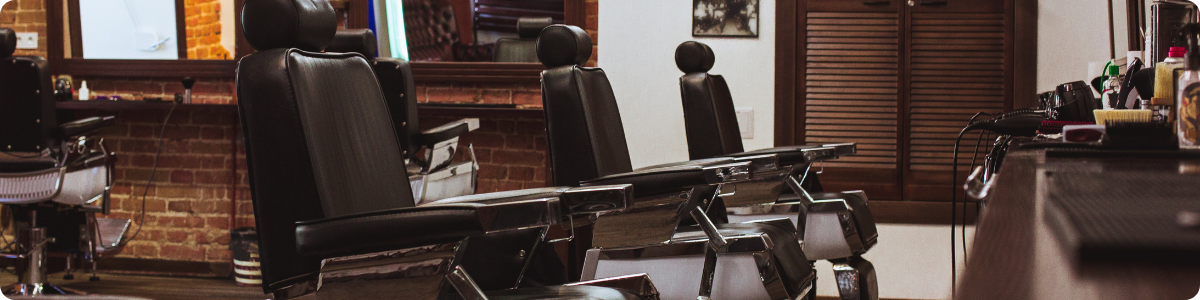
The barbershop was never just a grooming space. It was—and remains—a place of meeting, relaxation, conversation, and ritual. ✔️ At the heart of every neighborhood, from the early 19th century to today, traditional barbershops serve as social hubs filled with stories, experiences, and authentic men's care.
With this article, we'll journey through the history of the barbershop, see how it evolved, what traditions it kept alive, and how this unique culture returned stronger than ever in the modern world
The history of the classic barbershop begins in the 19th century, when the barber wasn't just a craftsman; he was a point of reference for the entire neighborhood. A visit to the barbershop was a ritual: men would enter to sit in heavy wooden chairs, enjoy a traditional shave, and hear the news of the day. This social dimension made the barbershop so captivating that it quickly became the main gathering and discussion space in daily life.
In old barbershops, the barber knew all the neighborhood people by their first names. He was there to cut hair, shave, groom, give a word of conversation, a joke, or advice. The haircut was just the excuse—what the barbershop truly offered was an experience of connection and release. The tools, carefully arranged on wooden surfaces, gleamed from the special oils and tonics they used daily.
Giannis' Comment: "In our own shop, even today I see that people don't just come for the service; they come for the company. Nothing has changed since then."
The aesthetic of this era was distinctive: walnut wood, leather supports, marble sinks, brass knobs, and of course the characteristic mirror with handmade decorations. Behind the ritual lay a deep understanding of men's grooming. The products they used—pomades, hair tonics, oils, and aftershave—were high quality, designed to care for skin and hair without unnecessary chemicals.
It's no coincidence that many of these have returned powerfully today. The modern man seeks exactly this: a moment of relaxation and authentic care within a space that honors and respects him. And as it turns out, the roots of this ritual lie in the classic barbershop itself.
While the 19th century was the golden age of the authentic barbershop, the 20th century brought a series of upheavals that radically changed the landscape. With the advent of the Industrial Revolution and the development of new technologies, men's grooming began to gradually shift toward personal-use products. The barbershop, which until then had been the center of men's grooming, faced a powerful opponent.
In 1903, Gillette introduced the safety razor—a revolutionary product for its time. The strategy was simple: safer shaving, quick results, and much lower cost. The company launched one of the largest marketing campaigns of the era, positioning the razor as "the shave of the future." The public responded dynamically, and soon many men began shaving themselves at home.
Giannis' Comment: "Even today I see it: many men do basic shaving at home, but when they want a real experience they come to the barbershop. It's a different thing."
As if that weren't enough, the Great Depression and the two World Wars further reduced visits to barbershops. Economic uncertainty made men cut their expenses. The traditional barbershop, which once was full of noise and life, began to empty.
In the 1960s, hippie culture brought long hair, freer lines, and men no longer found reason to visit a barber so often. The unisex salons that appeared a bit later gave the final push, offering modern styles and services for everyone.
Thus, by the end of the 20th century, the classic barbershop had passed to the sidelines. However, this wasn't the end of the story—because as we'll see in the next part, the tradition not only wasn't lost, but returned stronger than ever.
In the early 21st century something unexpected happened: the world began to tire of the impersonal experience of large unisex salons. Men sought again a space that represented them, a space that reminded them of tradition and quality. Thus, gradually the first new age barbershops appeared—barbershops that combined the air of the old era with modern services and aesthetics.
This "renaissance" was based on a clear need: men wanted grooming specifically designed for them again. Haircuts that follow their hair type, shaving with technique, facial grooming, high-quality products, and an environment where they feel comfort and respect. Barbershops returned with strong identity, vintage aesthetics, leather chairs, wooden furniture, and of course… the legendary scissors of the old barber.
Giannis' Comment: "In the first years of HairMania, I already saw that men were returning to the ritual. They didn't want just a 'haircut.' They wanted an experience."
Many young professionals tried to mimic the aesthetics of an old barbershop, but the authentic barbershops stood out because they gave substance and not just style. They invested in technique, training, tools, brushes, razors, grooming products, and even revived techniques that had been lost, like traditional shaving with soap and blade.
Most importantly, they brought back the warmth and connection of the old era. Men began seeking a regular barber again, someone who knows them, remembers their styles, and can truly advise them. This human relationship was the reason the barbershop returned so dynamically.
Today, barbershops aren't just a grooming space; they're an experience full of character, history, personality, and technique. A ritual that celebrates men's care and confidence.
Beyond the techniques of the old barber, one of the elements that contributed most to the charm of the traditional barbershop was the quality of products. Barbers never used "whatever." The products chosen were designed specifically for men, with formulas that offered real care: pomades with rich texture, tonics that revitalized the scalp, aftershave with clean aromas and rejuvenating action.
While today many products target the masses and low cost, the traditional barbershop kept the bar high. A visit to the barbershop meant that your skin, hair, and beard would receive the best possible care, with truly specialized products. This quality mindset has been so deeply connected with barbershop culture that many men even today trust their barber to recommend products they can't easily find elsewhere.
✨ Premium Tip: "In the authentic barbershop, quality always shows in the products—not on the signs."
Today, many of the authentic barbershop essentials have made a strong comeback. Traditional shaving soaps with natural ingredients, refreshing hair tonics that hydrate and add shine, and classic pomades with either strong or flexible hold are once again among the top choices for men seeking a genuine grooming experience. These products aren’t just tools — they are an important part of the ritual and the identity of the barbershop itself.
Modern barbershops no longer constitute just a service space, but a complete experience. Haircuts, shaving, and grooming have been transformed into ritual, with each step having its own role. From warming the towel to using premium products, everything is done with the goal of relaxation, rejuvenation, and improving men's appearance.
The barbershop today is a space that combines traditional style with modern techniques. You enter and the atmosphere "embraces" you: the wooden furniture, leather chairs, the aroma of tonics, the sound of scissors, the friendly conversation. Men seek an experience that goes beyond the ordinary—a moment for themselves, but also a connection with classic grooming culture.
At the same time, the increasing demand for quality products has led professionals to choose only the best. Pomades for every hair type, balms for hydration, grooming products made from natural ingredients, and hair tonics that provide freshness—all of these now form the core of the barbershop experience.
✨ Barber Insight: "The modern grooming experience is built on quality and consistency."
This is exactly why authentic barbershops stand out: they don’t rely on trends, but on tradition, consistent quality, and an experience that stays with you long after you leave. Just one visit is enough to understand why barbershop culture has returned so powerfully to men’s lives and why it continues to grow year after year.
Although modern barbershops differ in technology, materials, and aesthetics, the philosophy behind the experience remains the same for over 150 years. Men don't just seek a technically correct haircut, but a moment of relaxation and contact with a tradition that honors them. Historical influences are visible: from the music and décor to the way the barber wipes the neck with the towel and serves a hot drink or whiskey.
The comparison of the two eras shows impressive similarities but also different needs. Below, the table summarizes the basic characteristics of the old and modern barbershop, showing how alive this culture remains.
Despite the developments, the common denominator remains the same: men want quality, technique, reliability, and an environment that gives them confidence. That's why the barbershop isn't fashion—it's a culture that evolves but doesn't forget its roots.
Despite massive changes in fashion, products, and technology, the barbershop remains alive thanks to three fundamental pillars. These principles are what make men feel they're entering a space with personality, history, and culture, a space that offers them something more than a quick haircut.
The infographic below presents the three fundamental "lines" that keep barbershop tradition alive, with a modern approach but dedication to the authentic spirit.
Technique is what sets the barbershop apart — precision, blade control, and skill in every movement.
Classic wood, leather, mirrors, warm lighting — the atmosphere that makes men feel at home.
The bond between barber and client — trust, familiarity, and personal understanding.
These three principles are the true heart of the barbershop and reveal why this culture not only survived but is now thriving once again. In a world where everything feels rushed and impersonal, men look for something authentic — and they find it in the barbershop.
In the modern world, the barbershop has transformed into a space that honors the past but fully leverages today's possibilities. Men aren't just looking for a good haircut; they seek an experience that combines technique, aesthetics, and relaxation. A meeting point where classic ritual, the aroma of tonics, and the sound of clippers blend with modern products, new techniques, and styling trends.
Today's barbershop philosophy remains deeply emotional. Men want to be groomed, but also to feel comfort, trust, and respect. The barber isn't just a professional—he's a counselor, a point of reference, part of the client's daily routine. The bonds created can last for years, just like in the old days, and this is what makes barbershops unique within modern grooming culture.
At the same time, the development of the men's grooming market has given tremendous momentum to the space. Pomades with excellent hold, conditioning balms, men's skincare products, beard oils, mustache waxes, and next-generation tonics have evolved the grooming process into a complete ritual. Men's loyalty to premium products has increased dramatically, making barbershops now a point of information, education, and premium experience for every client.
Today, barbershops worldwide operate as small communities where tradition becomes modern and the modern image gains substance through its roots. From the simplicity of classic shaving to the most modern grooming rituals, the barbershop continues to be the heart of men's grooming.
The iconic red and white – and in some countries red, white, and blue – rotating barber pole is one of the most recognizable symbols in the world of men’s grooming. Despite its cheerful appearance, its origins are far more medical, dramatic, and tied to the surgical practices of the Middle Ages.
From the 13th to the 18th century, barbers in Europe were not limited to haircutting and shaving. They served as barber–surgeons, performing a wide range of minor medical tasks such as wound care, tooth extractions, bandaging, and most notably, bloodletting.
Bloodletting was believed to restore the body’s balance, according to the medical theories of that era. As a result, the barber was essentially a hairdresser, healer, surgeon, and dentist combined.
The barber pole was originally created as a visual sign to indicate that the shop offered bloodletting services. Barbers would wash and hang their blood-soaked and clean bandages outside their shops, allowing them to twist in the wind. The mix of red (blood-stained) and white (clean) bandages caught the attention of passersby.
Eventually, this imagery was replaced with a painted pole wrapped in spiral stripes: red symbolizing blood and white representing the clean bandages. In countries like the United States, the blue stripe was added later, symbolizing veins or simply for aesthetic and patriotic reasons.
During the bloodletting process, patients would hold a wooden rod to stimulate blood flow in the arm. This simple tool eventually became part of the symbolic representation of the barber pole.
The spiraling motion of the modern electric barber pole recreates the optical illusion of bandages twisted around a rod – a design rooted in medieval medical practices.
As medical science evolved, barber–surgeons were legally separated from trained physicians and were no longer permitted to perform surgery. However, the pole remained outside barber shops, slowly shifting from a medical sign into a symbol of traditional grooming.
By the 20th century, the barber pole had become the universal emblem of the classic barbershop – a visual shorthand for craftsmanship, tradition, and authentic men’s grooming culture.
In modern times, the barber pole has no connection to medical procedures. Instead, it represents the art of barbering, the heritage of men’s grooming, and the sense of community that barbershops provide. It is a historical icon that transitioned from surgery to style and became a globally recognized symbol of the barbershop culture.
"The haircut wasn’t just perfect — it was an experience. The atmosphere, the music, and the barber’s smile made me feel like I belonged there."
— Nick M.
"First time I tried traditional shaving with a blade — I wouldn’t trade it for anything. Different feeling, different care."
— Anthony R.
"My barber remembers me every time. He knows my style, my habits, and what truly suits me. This relationship simply can’t be found anywhere else."
— George K.

Subscribe to our newsletter and receive grooming tips, new products, and exclusive offers directly to your email.
Only benefits. No exaggeration.

Giannis – Owner of HairMania Greece & Founder of HairMaker.Gr
Professional hairstylist with 25 years of experience in hair and beard care. Owner of HairMania Greece and founder of HairMaker.Gr.
Together with the HairMaker.Gr team, I publish articles based on experience, real testing, and discussions from the barbershop.
Questions about hair or grooming? Send an email to info@hairmaker.gr.
Follow us:
@hairmakergr | @hairmaniagr


Comments (0)